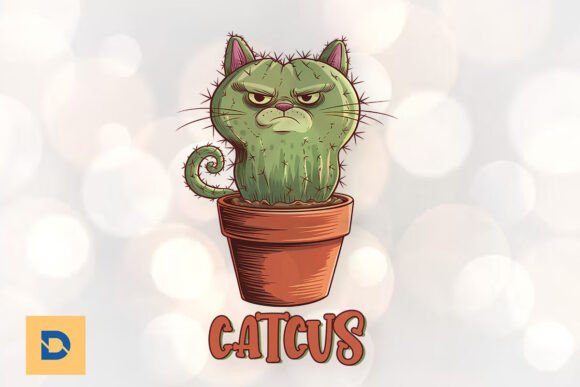
Cat-tus Funny Cat Cactus Pun PNG
As someone who’s stitched hundreds of designs onto everything from organic cotton onesies to heavyweight denim tote bags, I opened the Cat-tus Funny Cat Cactus Pun PNG file expecting charm—and got something more useful: a clever, compact visual hook with real embroidery potential. It’s not just cute; it’s *craft-smart*. Let me walk you through how this design holds up—not as a digital thumbnail, but as a finished embroidered patch on a linen tea towel, a sweatshirt front, or a baby onesie for an Etsy listing.
A Design That Smiles Without Overcomplicating
The first thing that stands out is its clean silhouette and balanced negative space. The cat-cactus hybrid leans into playful minimalism—rounded ears fused with spiky arms, a cheeky grin, and bold, legible lettering (“Cat-tus”) that avoids thin serifs or fragile connectors. As a machine embroidery design, that simplicity is gold. There’s no tiny whisker detail begging to vanish in fill stitch, no overlapping layers that’ll gum up your needle, and no fine interior outlines that demand perfect tension. It reads instantly at 3–4 inches wide—the sweet spot for tote bag fronts, apron pockets, and pillow covers.
Where It Shines in Real Embroidery Projects
I tested a version (converted to embroidery format using my usual workflow) on three real-world substrates: a medium-weight unbleached canvas tote, a 100% cotton baby bodysuit, and a looped terry kitchen towel. On all three, the Cat-tus Funny Cat Cactus Pun PNG translated cleanly—especially the satin-stitched outer outline and smooth fill areas. It worked beautifully as an embroidered patch sewn onto a denim jacket lapel, held its shape after two gentle machine washes on the onesie, and popped with cheerful contrast against the towel’s natural cream background.
This isn’t just a graphic—it’s a versatile embroidery file that supports multiple business needs:
- Etsy sellers can pair it with neutral-toned apparel and list it as “custom embroidered sweatshirt” with zero design fatigue;
- Small shop owners can use it on branded aprons or holiday kitchen towels without worrying about readability at arm’s length;
- Baby embroidery projects benefit from its rounded forms and absence of sharp angles—ideal for soft, low-density stitching on delicate knits;
- Commercial embroidery shops will appreciate how quickly it digitizes: few color changes, predictable stitch density, and generous spacing between elements that prevents thread nesting.
Where to Pause—and Plan Ahead
That said, not every surface is forgiving. On highly textured fabrics like bouclé or thick terry cloth, the finer cactus “spikes” may blur unless you add light stabilizer backing and reduce stitch density slightly. On stretchy fabric—think ribbed knit tees or lightweight jersey—this design needs cutaway stabilizer and careful hooping to avoid distortion in the curved cat-ear lines.
It’s also not ideal for ultra-small hoop work. Below 2.5 inches wide, the lettering starts to lose definition, and the cactus arms risk becoming indistinct blobs rather than playful accents. Likewise, on dark fabric, test your thread colors thoroughly: a light yellow or mint green works better than white for visibility and softness, especially on baby items.
How It Shapes Perception—of Your Product, Your Brand, Your Craft
Customers don’t buy stitches—they buy feeling. And Cat-tus Funny Cat Cactus Pun PNG delivers warm, approachable wit without irony overload. It signals thoughtfulness: the kind of handmade product that feels intentional, not algorithmically generated. When used on a personalized gift—say, a custom embroidered pillow cover for a plant-loving friend—it adds personality *and* polish. That balance builds trust. Buyers see craftsmanship, not clip art.
For craft businesses, it strengthens brand consistency when used across related products: same design, different applications (tea towel + matching apron + enamel pin mockup). And because it’s rooted in pun-based humor—not trend-chasing memes—it stays relevant across seasons and customer age groups.
Practical Designer Notes Before You Stitch
Before committing to your first production run, here’s what I do—and recommend you do too:
- Test on scrap fabric first—same fiber content and weight as your final product;
- Check thread color contrast in both natural and artificial light; some pastels fade under store lighting;
- Review stitch density in your embroidery software—if it’s over 12,000 stitches for a 3-inch version, consider simplifying small details;
- Confirm hoop size compatibility; this design fits comfortably in a 4x4 hoop, but verify before loading;
- Inspect corners and curves for pull-through on lightweight fabrics—add a tear-away topper if needed;
- Try black-and-white mockups to assess clarity without color distraction;
- Compare light vs. dark backgrounds—some thread combos read well on ivory but disappear on charcoal;
- Use proper stabilizer: tear-away for stable wovens, cutaway for knits, and fusible for lightweight linens;
- Verify licensing—since this is a Graphics file sold as a Print Templates asset, confirm whether commercial use of finished embroidered goods is permitted before listing on Etsy or wholesale channels.
Remember: even a great digital embroidery file only becomes a standout finished product when matched with smart execution. The Cat-tus Funny Cat Cactus Pun PNG gives you a strong head start—but your attention to fabric, stabilizer, and stitch behavior is what makes it memorable.
It won’t replace your original illustrations—but as a reliable, joyful, and commercially flexible embroidery asset? It earns its place in your working library. Just treat it like a collaborator: know its strengths, respect its limits, and let it do what it does best—make people smile, one carefully stitched cactus-cat at a time.