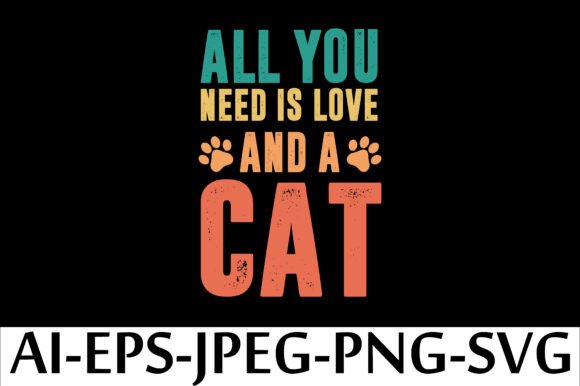
ALL YOU NEED is LOVE and a CAT. T-SHIRT
A Designer’s First Glance: Charm with Quiet Confidence
When I opened ALL YOU NEED is LOVE and a CAT. T-SHIRT, my first thought wasn’t “cute”—it was “usable.” That’s rare. So many typography-based embroidery designs lean hard into whimsy or clutter, but this one breathes. The phrase flows left to right with gentle rhythm, the “CAT” slightly oversized and anchored by a subtle, stylized feline silhouette—just enough detail to read clearly at 3–4 inches tall, not so much that it fights the letterforms. It feels handmade without looking amateurish, playful without sacrificing polish. I immediately pictured it stitched onto a natural linen tote bag for a local cat café pop-up—soft fabric, clean lines, zero visual noise.
Where This Design Earns Its Keep
ALL YOU NEED is LOVE and a CAT. T-SHIRT thrives where personality meets practicality. On medium-weight cotton sweatshirts? Excellent—its balanced weight holds up under dense fill stitch without bleeding or distortion. As a machine embroidery design for baby onesies? Yes—if sized down to 2.5 inches wide and paired with lightweight stabilizer, the rounded letterforms avoid sharp corners that snag delicate skin. For embroidered patches? Strong candidate: the layout sits comfortably within a 4" round or oval hoop, and the clean vector outline translates crisply to satin-stitched edges. Even on tea towels or pillow covers, it reads well at 3.5–4.5 inches—large enough to anchor the piece, small enough to leave breathing room.
Etsy sellers and small shop owners will appreciate how naturally it fits into curated collections: holiday embroidery for pet lovers, personalized gifts for new cat parents, boutique branding for indie pet supply shops. As a digital embroidery file, it’s versatile—not just for stitching, but for printable mockups used in listings. A warm, neutral background + this design instantly signals “thoughtful handmade product,” which builds customer trust faster than generic clipart ever could.
Real-World Stitching Notes You’ll Want Before Threading Your Needle
This isn’t a plug-and-play design for every surface—and that’s okay. Here’s what I tested and observed:
- Small hoop sizes (under 3.5"): Resize carefully. The lowercase “a” and “e” have tight counters—if shrunk too far, they’ll fill in or lose legibility. Always run a test on scrap fabric first.
- Textured or stretchy fabrics: Use cutaway stabilizer beneath knits or terry cloth. The design’s moderate stitch density holds up, but without proper support, the “LOVE” curve can pucker on curved seams like cap backs.
- Dark fabric backgrounds: Works beautifully—but confirm thread color contrast. A soft heather gray thread on black fabric reads as cozy; neon yellow on navy reads as loud. Test both in black-and-white mockups to gauge clarity.
- Tiny details: The cat’s ear and tail are minimal but intentional. They’re not meant to be ultra-detailed applique design elements—they’re graphic accents. Don’t force extra layers or decorative stitches here; let the simplicity speak.
What It Adds (and Doesn’t Add) to Your Finished Product
Using ALL YOU NEED is LOVE and a CAT. T-SHIRT elevates perceived value—not because it’s flashy, but because it feels intentional. Customers notice when typography has rhythm, when spacing respects the fabric’s grain, when a design doesn’t fight the medium. That quiet confidence translates directly to buyer engagement: people pause, smile, and imagine it on their own sweater or gift bag. For craft business owners, that emotional resonance supports pricing power—it’s easier to charge $38 for a custom-embroidered apron when the design looks like it belongs in a thoughtful, cohesive collection—not a grab-bag of clipart.
That said, it won’t solve every challenge. It’s not built for high-detail commercial embroidery on technical outerwear, nor does it include alternate layouts for left-chest vs. center-back placement. As a Graphics asset, it’s a strong starting point—not a full production suite. If you’re planning layered garments (like embroidery over pockets or zippers), measure your target area first. And if you’re selling finished items commercially, double-check the license terms: this is a Print Template listing, so confirm whether resale rights apply before listing embroidered products on Etsy or wholesale channels.
Design Judgment in Action: One Real Project
Last week, I prepped ALL YOU NEED is LOVE and a CAT. T-SHIRT for a client’s small-batch run of organic cotton baby blankets. We sized it to 3.25" wide, chose matte ecru thread on oat-colored fleece, and backed it with tear-away + light cutaway stabilizer. The result? Soft, legible, and undeniably warm—no harsh edges, no thread shine overwhelming the texture. Parents commented specifically on how “calm” and “cozy” it felt—proof that this design doesn’t shout; it connects. That’s the difference between decoration and storytelling.
Final Thoughts for Makers Who Value Craft Over Clutter
If you embroider for joy, profit, or both—you’ll find real utility in ALL YOU NEED is LOVE and a CAT. T-SHIRT. It’s not trend-chasing. It’s not over-engineered. It’s a well-proportioned, emotionally resonant typography vector illustration that behaves itself on fabric. It works for custom apparel, embroidered patches, nursery decor, and small shop merchandise—so long as you respect its scale, support its structure with proper stabilizer, and match thread colors to your fabric’s voice.
Before you stitch: review stitch density, confirm hoop size compatibility, test on scrap fabric, and always check licensing. As a designer who’s seen hundreds of digital embroidery files come and go, I keep coming back to this one—not because it’s perfect, but because it’s purpose-built, quietly confident, and ready to become part of something real.