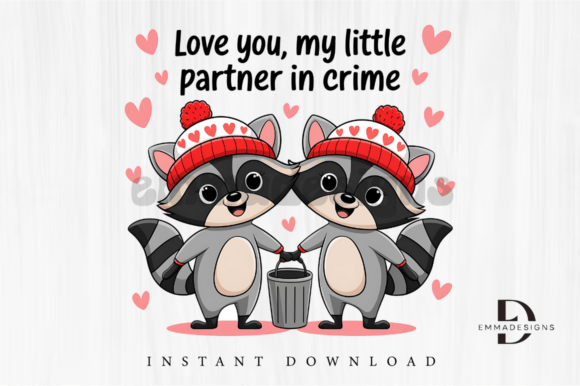
Valentine Raccoon PNG, Retro Valentine
A Designer’s First Look: Charming, Nostalgic, and Surprisingly Versatile
When I opened Valentine Raccoon PNG, Retro Valentine, my first thought wasn’t “cute”—it was “usable.” That’s rare. So many retro-themed digital designs lean hard into kitsch or oversimplified outlines, but this one lands with quiet confidence: a rounded, friendly raccoon holding a tiny heart, rendered in clean lines and balanced negative space. The retro styling isn’t just aesthetic—it’s functional. The bold contours, minimal internal detail, and generous spacing between elements translate beautifully to embroidery without needing heavy editing. It feels like a design made *for* makers, not just for screen display.
Real-World Test: Embroidering a Custom Tote for a Local Boutique
Last week, I prepped Valentine Raccoon PNG, Retro Valentine for a small-batch embroidered tote order—cotton canvas, medium-weight, 8” x 8” hoop. No sublimation, no print—just thread and needle. I converted the PNG to a machine embroidery design using vector tracing (always verify your digitizer’s output), then ran test stitches on scrap fabric. The result? Crisp satin stitch edges around the raccoon’s outline, smooth fill stitch in the heart, and zero thread nesting in the ears or tail tip. Because the original graphic avoids micro-detail—no eyelashes, no textured fur, no fine linework—it didn’t ask for impossible precision. That’s huge. It meant less re-hooping, fewer thread breaks, and a finished product that looked intentional, not rushed.
Where This Design Truly Shines
- Sweatshirt embroidery: Its bold shape reads clearly even on thick, napped fabric—no lost detail in the pile.
- Personalized gifts: As a baby embroidery motif on onesies or burp cloths, it’s sweet without being saccharine—and scales down cleanly to 3.5” wide.
- Embroidered patch production: Clean edges = clean cut edges after sewing or iron-on backing. No fraying corners.
- Holiday merchandise for small shops: Works equally well on tea towels, aprons, and pillow covers—its retro palette adapts to red, navy, cream, or charcoal backgrounds.
- Etsy listings & printable mockups: As a Graphics asset, it drops cleanly into lifestyle mockups—no fuzzy edges, no transparency bleed.
Where to Proceed With Care
This isn’t a one-size-fits-all embroidery file—and that’s honest, not limiting. Here’s where I slow down:
- Small hoop sizes under 4”: The heart detail and raccoon’s facial shape need breathing room. Below 3.25”, proportions start to compress, risking loss of charm.
- Stretchy fabric (like ribbed knits): Requires cutaway stabilizer + basting stitch—those curved outlines can distort without firm support.
- Dark fabric with light thread: The design’s open interior areas mean you’ll see stabilizer shadow unless you use tear-away + proper tension. Always test thread colors—especially for the heart.
- Curved surfaces (caps, beanies): Avoid placing it across the crown seam. Center it over the front panel instead—its symmetry holds up better there.
- Frequent-wash items (baby clothes, kitchen towels): Confirm stitch density isn’t too low—fill areas should be dense enough to withstand laundering without puckering.
What It Adds to Your Handmade Product—Beyond Aesthetics
Valentine Raccoon PNG, Retro Valentine quietly elevates perceived value. It doesn’t scream “handmade”—it whispers “thoughtfully made.” Customers notice that difference: the clean line work signals craftsmanship, not clipart. For Etsy sellers, it supports brand consistency when paired with other retro-themed designs—think matching mugs, stickers, and apparel. As a T-Shirt Designs asset, it encourages repeat engagement: buyers return not just for the raccoon, but for the cohesive, nostalgic mood it represents. And because it’s rooted in simplicity—not trend-chasing clutter—it stays relevant beyond February. I’ve already used it in March as a “Partner in Crime” gift for a friend’s birthday—same design, new context, same warm reception.
Practical Notes Every Embroidery Designer Should Check
- Always run a test stitch on scrap fabric—especially if pairing with textured or dark materials.
- Review stitch density before finalizing your embroidery file. Too sparse = fragile; too dense = stiff fabric.
- Confirm hoop size compatibility with your machine and intended garment placement.
- Inspect small details in black-and-white mockups—what reads on screen may vanish in thread.
- Use proper stabilizer: medium cutaway for knits, tear-away for stable wovens, fusible for lightweight linens.
- Verify licensing terms before selling finished products or bundling as design assets—this is a digital embroidery file, not public domain.
- Ask yourself: Does this support your craft business goals? For me, yes—it fits cleanly into holiday collections, custom orders, and evergreen gift lines.
Final Thought: A Design That Respects Your Time and Talent
As someone who’s digitized, stitched, and sold hundreds of embroidery projects, I appreciate when a digital design doesn’t demand compromise. Valentine Raccoon PNG, Retro Valentine doesn’t beg for fixes. It doesn’t hide flaws behind glossy previews. It arrives ready—clean, characterful, and engineered for real-world making. Whether you’re stitching a single personalized gift or scaling up for a boutique wholesale order, it performs with quiet reliability. That’s not just convenience. It’s respect—for your craft, your customers’ expectations, and the handmade integrity your small shop stands for.