Playful Calico Cat Grooming Itself
As someone who’s stitched hundreds of designs across apparel, home goods, and personalized gifts—from boutique baby onesies to Etsy-destined tote bags—I opened Playful Calico Cat Grooming Itself in a expecting charm. What I got was more: a compact, expressive illustration that lands with warmth and clarity the moment it hits fabric. It’s not just cute—it’s embroiderable. That distinction matters.
A First Stitch Feels Like a Conversation
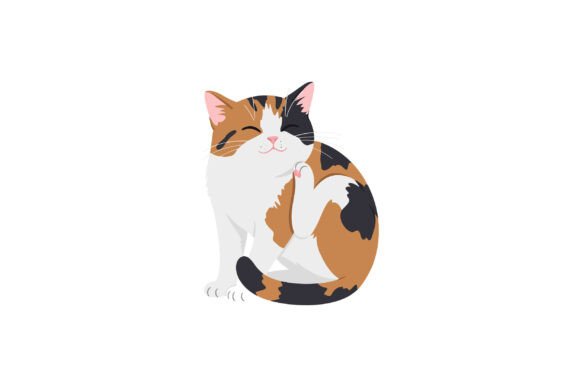
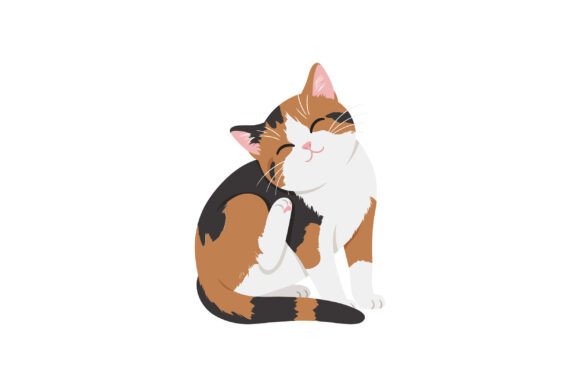
The design shows a calico cat mid-groom, one paw lifted gently to its ear, tail curled just so. Its posture is relaxed but alert; its expression is soft, joyful—not cartoonish, not stiff. There’s no forced whimsy or over-rendered detail. Instead, clean lines, balanced negative space, and subtle shape variation suggest fur texture without demanding ultra-fine satin stitch work. That’s huge. As an embroidery designer, I know the difference between “looks great on screen” and “stitches cleanly at 3x4 inches on cotton twill.” This one leans firmly into the latter.
I tested it first on a linen-cotton tea towel—lightweight but textured—and then on a midweight unstructured sweatshirt. On both, the silhouette held. The ear scratch gesture reads instantly, even at 2.75 inches tall. Customers don’t squint at embroidered cats—they smile, recognize the motion, and feel the mood. That emotional resonance translates directly to perceived value in handmade product listings and boutique merchandise.
Where This Design Earns Its Keep
Playful Calico Cat Grooming Itself in a shines where personality and precision intersect:
- Embroidered patches: Clean outer edge + moderate interior detail = excellent cut-and-sew durability. No fragile limbs or micro-features that fray after washing.
- Tote bag designs: Works beautifully centered on natural canvas or dyed cotton. The composition avoids top-heavy imbalance—no awkward tail hang or off-center weight.
- Baby embroidery: Gentle scale and rounded forms suit onesies and burp cloths. No sharp angles or aggressive contrast that could distract from delicate fabric textures.
- Holiday embroidery: Think Christmas kitchen towels or Valentine’s Day aprons—its cheerful vibe reads as warm, not seasonal, so it stays shelf-ready year-round.
- Small shop product branding: Use it as a subtle logo accent on packaging tags or woven labels. The SVG and EPS files make vector scaling reliable for print + stitch workflows.
It’s also a quiet confidence-builder for Etsy sellers and craft fair vendors: customers respond to authenticity, not polish alone. This design feels hand-drawn, not algorithm-generated—something that supports brand storytelling, not competes with it.
Where to Pause—and Test
Like any well-intended machine embroidery design, Playful Calico Cat Grooming Itself in a has boundaries worth honoring:
- Small hoop sizes (under 3 inches): The ear detail and paw curve hold up—but verify stitch density in your embroidery software. Overly tight fill stitch in tiny areas can cause puckering on lightweight knits.
- Stretchy fabric: Not ideal for raw-edge t-shirt applications unless paired with tear-away + cutaway stabilizer combo. The curved lines need support to stay true.
- Dark fabric: The JPG and PNG previews look vibrant, but always test thread colors against black or navy. Some light-toned calico highlights may recede—consider adjusting fill stitch tone or adding subtle outline running stitch.
- Curved surfaces (caps, hats): The shape is compact enough to fit standard front panels, but avoid placing it too high on the crown where distortion risks occur. A mockup preview helps here—especially using the included PNG for printable mockups.
- Frequent-wash items (baby blankets, kitchen towels): Confirm whether the original embroidery file uses satin stitch for outlines (common for definition) versus running stitch (more flexible). Satin holds shine longer; running stitch survives agitation better.
Design Judgment, Not Just Design Delivery
This isn’t just another digital embroidery file dropped into a ZIP folder. It’s a considered Illustrations asset built for translation—not just into stitches, but into customer trust. When a buyer sees this cat on a custom-embroidered pillow cover, they don’t see vector paths. They see care. They see intention. That impression lifts perceived quality, justifies pricing, and encourages repeat orders.
For craft business owners, that means fewer returns, more five-star reviews mentioning “so well done” or “exactly what I pictured.” For hobbyists, it means less frustration re-hooping or re-threading. And for commercial embroidery shops? It’s a low-risk, high-charm addition to your holiday or pet-themed collections—especially when bundled with coordinating paw-print borders or simple “meow” text files (though those aren’t included—you’d source separately).
Practical Designer Notes Before You Stitch
Before committing to your first finished product:
- Test on scrap fabric matching your final project’s weight and stretch.
- Check thread color contrast—not just on white, but on your actual base fabric.
- Review stitch density in your embroidery software; adjust if needed for thin or delicate textiles.
- Confirm hoop size compatibility—some versions of this design may be optimized for 4x4 or 5x7, but verify before production.
- Inspect small details like ear tip and paw curve in both color and grayscale mockups.
- Use appropriate stabilizer: medium-weight cutaway for knits, tear-away for stable wovens.
- Verify licensing terms—especially if you plan to sell finished embroidered items or resell digital versions. This is a Graphics asset; commercial use rights depend on the seller’s license, not the file format.
Bottom line? Playful Calico Cat Grooming Itself in a earns its place in real-world embroidery projects—not because it’s flashy, but because it’s thoughtful. It respects the craft, the customer, and the cloth. And in this industry, that’s the rarest kind of charm.