Pet House Icon: Cute Puppy & Kitten Home
First Impressions—Charming, Clean, and Instantly Recognizable
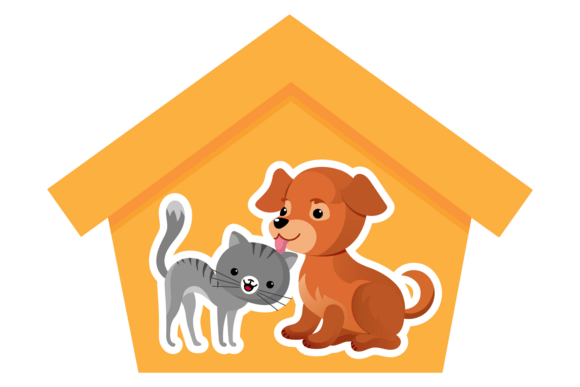
When I opened Pet House Icon. Cute Puppy and Kitten Ho, my first thought wasn’t “cute”—it was “usable.” That’s rare. So many pet-themed illustrations lean into cluttered charm or overly stylized cuteness, but this one lands with quiet confidence: two soft-eyed animals nestled in a simple, rounded house shape, cleanly isolated on white. No background noise, no forced whimsy—just warmth, balance, and strong negative space. The composition feels intentional for embroidery: the house outline is bold enough to hold up as a satin stitch border, the puppy and kitten are distinct but not fussy, and their shared scale keeps visual weight centered. It reads well at 2.5”–3.5”, which covers most tote bag corners, baby onesie chests, and apron pockets without distortion.
A Real-World Test: Embroidering This on a Linen Tea Towel
Last week, I stitched Pet House Icon. Cute Puppy and Kitten Ho onto a natural linen tea towel for a local boutique’s spring launch. Why linen? Because it’s unforgiving—loose weave, slight stretch, zero forgiveness for poor stitch density or unstable underlay. I used medium-weight tear-away stabilizer, 40-weight rayon thread, and kept the hoop size at 4x4”. The result? Crisp edges, no puckering, and that gentle silhouette held beautifully—even where the fabric’s texture tried to swallow fine detail. Customers responded immediately: “That’s *my* house,” one said, pointing to her own porch swing and matching pets. That kind of emotional resonance isn’t accidental—it’s baked into how the design breathes on fabric. It doesn’t shout; it invites.
Where It Shines (and Where It Needs Care)
Pet House Icon. Cute Puppy and Kitten Ho excels in projects where clarity, comfort, and quiet storytelling matter:
- Custom apparel: Works especially well on sweatshirts and relaxed-fit tees—its rounded forms soften harsh garment lines.
- Baby embroidery: Gentle curves and minimal detail mean no scratchy stitch clusters near delicate skin.
- Embroidered patches: Clean outer edge makes it ideal for heat-applied or sew-on versions—no jagged transitions.
- Holiday and gift embroidery: Feels personal without being seasonal—perfect for new pet owners, foster families, or vet office gifts.
- Etsy listings and digital product previews: The transparent PNG and SVG files render flawlessly in mockups, and the EPS ensures scalability for branding kits.
But—and this matters—don’t force it where precision fights fabric. Avoid tight curves like cap brims unless you’ve tested the fill stitch behavior first. On thin or stretchy knits, reinforce with cut-away stabilizer and reduce stitch density slightly. And while the white-background isolation helps with digital prep, remember: on dark fabric, you’ll need underlay and possibly a tack-down stitch before the main motif to keep those soft animal shapes from sinking into the grain.
What It Adds to Your Finished Product—Beyond Aesthetics
This isn’t just decoration. When you choose Pet House Icon. Cute Puppy and Kitten Ho, you’re choosing coherence. Its balanced proportions support brand consistency across product lines—whether it’s a set of embroidered kitchen towels, matching pet-themed baby blankets, or a line of handmade patches sold alongside custom pet ID tags. Customers trust designs that look *made*, not dropped in. The lack of excessive detail means fewer thread breaks, smoother hooping, and faster turnaround—critical when you’re juggling Etsy orders or craft fair deadlines. And because it avoids cliché (no bones, no paw prints, no cartoonish grins), it feels timeless—not trendy. That longevity boosts perceived value, especially in personalized gifts where sentiment outweighs flash.
Practical Designer Notes Before You Stitch
Before committing to your next batch, do these five things:
- Test on scrap fabric—especially if using textured, dark, or stretchy material. Watch how the house outline anchors the design.
- Check thread color contrast carefully. Soft pastels read beautifully on cream or oatmeal, but avoid light yellow on ivory—it disappears.
- Review stitch density in your embroidery software. If fill areas feel heavy, reduce density by 5–8% for breathable fabrics like cotton poplin or lightweight denim.
- Confirm hoop size compatibility. While the graphic scales easily, your machine’s default settings may need adjustment for optimal underlay on curved elements.
- Verify licensing terms before selling finished items or bundling the file digitally. As an Illustrations asset, its commercial use depends on the license—not just the format (EPS, JPG, SVG, transparent PNG).
Final Thought: A Quiet Workhorse, Not a Flashy Gimmick
Pet House Icon. Cute Puppy and Kitten Ho won’t dominate a tradeshow booth—but it will earn repeat customers. It’s the kind of machine embroidery design that looks better after washing, holds up in a craft fair tote bag tossed in the trunk, and feels just right on a newborn’s onesie next to hand-stitched initials. For craft business owners, Etsy sellers, and small shop product developers, it’s not about novelty. It’s about reliability, warmth, and the quiet confidence that comes from knowing your embroidery project starts with a design that respects both the needle and the human who’ll hold the finished product.