Lucky Cat Figurine with a Smiling Face
As someone who’s stitched hundreds of designs across apparel, home goods, and boutique merchandise—most recently a line of embroidered baby blankets for a local nursery shop—I opened Lucky Cat Figurine with a Smiling Face expecting charm, but what I found was something more practical: a design that balances cultural warmth with real-world embroidery viability.
A First Stitch That Feels Like a Nod, Not a Shout
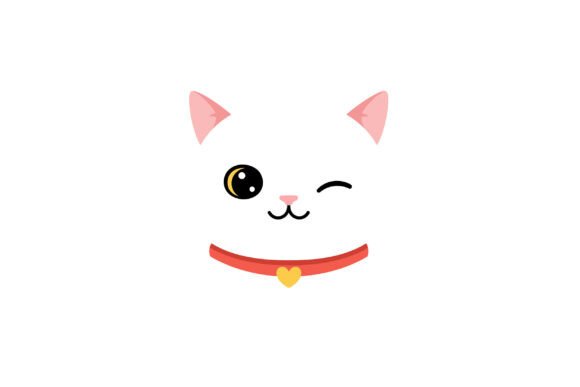
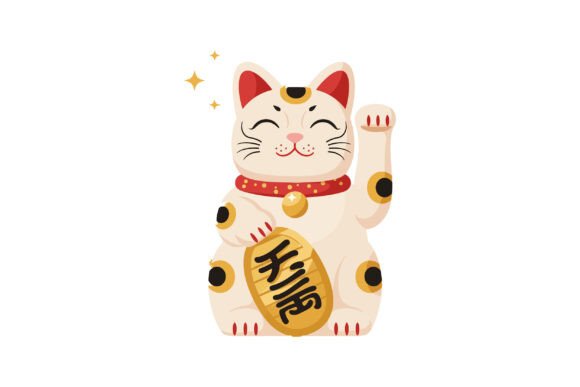
The moment you preview the PNG or SVG, the mood is clear: friendly, uncluttered, quietly confident. This isn’t a cartoon cat shouting “good luck!”—it’s a gentle, rounded silhouette with soft curves, a lifted paw that reads as welcoming rather than rigid, and just enough detail in the collar and bell to suggest tradition without demanding precision. The smile is subtle but unmistakable—no exaggerated grin that might distort under satin stitch or blur on textured fabric.
I immediately pictured it stitched onto a natural linen tea towel for a small-batch kitchen goods line—something warm, giftable, and quietly distinctive. No glitter, no over-the-top embellishment. Just clean lines, balanced negative space, and a shape that holds up at 3.5 inches wide—the sweet spot for tote bags, pillow covers, and apron pockets.
Where It Shines (and Where It Asks for Care)
Lucky Cat Figurine with a Smiling Face works especially well for custom apparel where personality matters but professionalism can’t be compromised. On a medium-weight cotton sweatshirt? Yes—it reads clearly even at 4 inches tall, thanks to its generous contours and minimal internal detail. On a structured cap front? Use caution: the raised paw and collar curve may need slight digitizing adjustment for smooth flow over the crown’s curve—test first on scrap fabric with your preferred stabilizer.
For embroidered patches, it’s a natural fit. The solid silhouette and defined edges translate cleanly into applique or fill-stitch builds. I’d recommend using a light tear-away stabilizer and keeping stitch density moderate—this isn’t a design meant for heavy fill; its strength lies in its simplicity. On baby embroidery? Ideal. Its rounded forms avoid sharp corners, and the red collar adds just enough contrast without relying on tiny details that vanish on knit onesies.
But here’s where attention matters: Lucky Cat Figurine with a Smiling Face isn’t built for ultra-fine work. Avoid hooping it below 2.75 inches unless you’ve tested thread tension and stitch clarity on your machine. On dark fabric, the red collar will pop—but only if your red thread is colorfast and dense enough to cover without bleeding through. On stretchy fabric like jersey or thin knits? Add cutaway stabilizer underneath and consider reducing stitch speed by 15–20% to prevent puckering around the collar curve.
What It Adds to Your Finished Product—Beyond Aesthetics
This design elevates perceived value without adding complexity. Customers don’t just see a cat—they recognize intention. That raised paw says “welcome.” The bell whispers “thoughtful gift.” The red collar nods to tradition without leaning into cliché. When used on an Etsy listing for personalized nursery decor, it helps tell a story before the buyer even reads the description.
It also supports brand consistency. Whether you’re selling handmade tote bags or digital embroidery files, Lucky Cat Figurine with a Smiling Face feels cohesive—not generic, not overly trendy. It pairs well with minimalist fonts, neutral palettes, and natural fiber products. And because it avoids intricate linework or micro-details, it scales reliably across mockups: from printable product previews to Instagram flat lays.
Practical Designer Notes Before You Stitch
- Always test on scrap fabric first—especially if stitching on textured weaves (like burlap or terry cloth) or layered garments (e.g., quilted jacket pockets).
- Check thread color contrast on both light and dark backgrounds. The red collar looks vibrant on cream or oat, but may mute on deep burgundy or charcoal unless you use a high-sheen polyester red.
- Review stitch density in your embroidery software. If the fill areas feel too heavy for lightweight fabrics, reduce density by 5–8%—the design’s charm lives in its shape, not its weight.
- Confirm hoop size compatibility. While the design fits comfortably in a 4” x 4” hoop, double-check the actual dimensions in your vector file—some EPS exports add invisible bounding boxes.
- Inspect small details at 200% zoom: the bell and collar seam should remain distinct, not merge into a blob at smaller sizes.
- Test black-and-white mockups—this design holds up beautifully in monochrome, making it versatile for branding or limited-thread projects.
- Use proper stabilizer: medium-weight cutaway for knits, light tear-away for stable wovens, and fusible + tear-away for lightweight silks or rayons.
- Verify licensing terms before selling finished items or bundling the digital embroidery file with other design assets. Since this falls under Illustrations and Graphics, confirm whether commercial use is included.
Final Thought: A Design That Works With You, Not Against You
Not every embroidery file earns repeat use. Some dazzle in previews but falter mid-stitch. Others demand endless tweaking just to hold shape. Lucky Cat Figurine with a Smiling Face isn’t flashy—but it’s reliable. It’s the kind of design I reach for when prepping holiday gifts for loyal clients, when building a consistent look for a craft fair booth, or when sourcing digital embroidery files for a new Etsy shop launch.
It doesn’t ask for perfection. It asks for intention—and rewards it with warmth, clarity, and quiet professionalism. Whether you’re stitching it onto a child’s first bib or packaging it as part of a seasonal digital embroidery file bundle, it carries goodwill without shouting. And in handmade product markets, that kind of sincerity? That’s the real lucky charm.