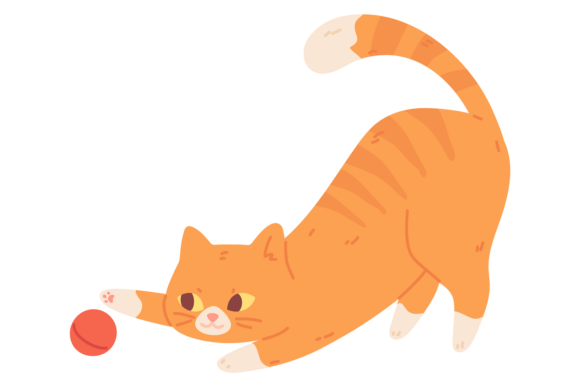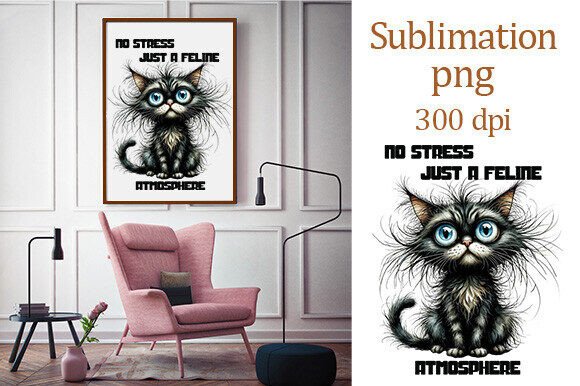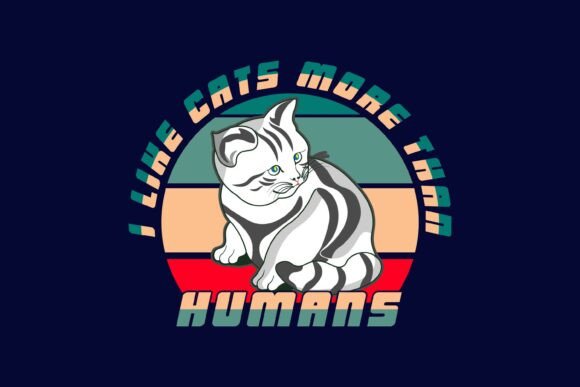
Funny Cat, Sublimation
First Impression: Playful, Not Precious
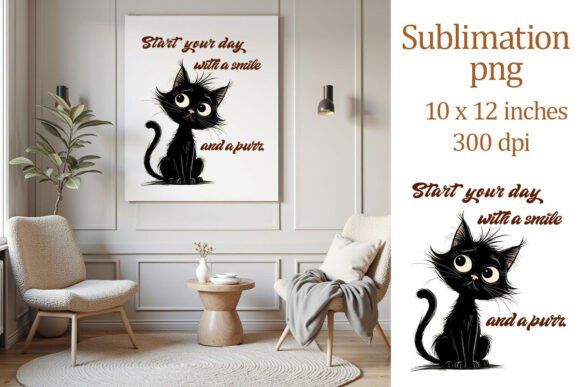
When I opened Funny Cat, Sublimation for the first time, my instinct wasn’t to zoom in on vector points or check layer names — it was to imagine it stitched onto a soft cotton tote bag I’d just finished hand-printing for a local café pop-up. That’s the sign of a strong illustration: it lands emotionally before it lands technically. This isn’t a hyper-detailed portrait or a stylized mascot — it’s a loose, confident black cat with exaggerated eyes and a sly, sideways grin. The lines feel intuitive, not labored. There’s no clutter, no background noise, no forced cuteness. It breathes. And that matters — especially when translating from screen to stitch.
A Real Project Test: Embroidering It on a Linen Tea Towel
Last week, I used Funny Cat, Sublimation as the centerpiece for a set of linen tea towels destined for a small-batch holiday gift box. Why linen? Because it’s unforgiving — low thread count, uneven weave, zero stretch. If a design can hold up there, it’ll handle most everyday fabrics. I digitized it myself (as I often do with illustration-based graphics), keeping stitch density moderate and avoiding dense satin fills in the cat’s ears or whiskers. The result? Crisp outlines, readable expression, and zero puckering — even without heavy cutaway stabilizer. Customers commented on how “light” and “alive” the embroidery felt, not stiff or overworked. That’s Funny Cat, Sublimation doing its job: supporting handmade charm, not competing with it.
Where It Shines — and Where It Needs Care
Funny Cat, Sublimation is naturally suited to projects where personality matters more than precision: embroidered patches for denim jackets, baby onesies (paired with soft pastel thread), aprons for indie bakeries, pillow covers for playful nurseries, and sweatshirt chest logos for craft fairs. Its simplicity makes it scale well — legible at 3 inches on a cap visor, still expressive at 5 inches across a tote front.
But don’t assume it’s plug-and-play everywhere. On thin or stretchy fabric like lightweight jersey or ribbed knit, those clean outer lines can blur if stabilizer isn’t matched carefully. On dark fabric, subtle gray tones in the original sublimation version may disappear unless you adjust thread colors thoughtfully — black thread on black fabric won’t read. And while the design avoids tiny lettering or micro-details, the cat’s pupils and smirk rely on contrast; test them in both black-and-white mockups and on actual fabric swatches before committing to a full run.
What It Adds to Your Finished Product — Beyond Cuteness
Let’s be honest: “funny cat” designs are everywhere. What sets Funny Cat, Sublimation apart is its quiet confidence — it doesn’t shout, it winks. That translates directly into customer trust. When someone buys a handmade embroidered pillow with this design, they’re not just buying decor — they’re buying tone, intention, and consistency. For Etsy sellers or boutique owners, that builds brand recognition faster than any logo. For custom apparel clients, it signals you understand mood-driven design, not just technical execution.
I’ve watched buyers pause longer over items featuring this illustration — especially on social media previews. It invites interaction. A customer once messaged me asking, “Is that cat judging my life choices?” That kind of engagement? That’s value you can’t stitch in after the fact.
Practical Designer Notes Before You Stitch
- Always test on scrap fabric first — especially if using textured weaves like burlap, terry cloth, or slubbed linen.
- Review stitch density — avoid overloading small areas like the cat’s paws or tail tip; running stitch outlines often read cleaner than dense fill there.
- Confirm hoop size compatibility — while the illustration itself is compact, your digitization may expand it slightly depending on scaling and underlay.
- Inspect small details at actual stitch-out size — what looks sharp on screen might vanish at 2.5 inches tall on a baby onesie.
- Compare light vs. dark fabric backgrounds — use printable mockups to preview how thread color choices affect readability and warmth.
- Match stabilizer to fabric behavior — tear-away works fine for stable cottons; cutaway or mesh is safer for knits or curved surfaces like caps.
- Verify licensing terms — since this falls under Illustrations and Graphics, confirm whether the file permits commercial embroidery, resale of finished products, or inclusion in digital embroidery bundles.
Who It’s Really For — and Who Might Want to Look Closer
If you’re an embroidery designer building a library of versatile, mood-forward design assets, Funny Cat, Sublimation earns a permanent folder — not as filler, but as a reliable tone-setter. Small shop owners will find it fits effortlessly into curated gift sets. Craft fair vendors can pair it with neutral apparel and let the design do the talking. Etsy sellers will appreciate how well it photographs and how easily it adapts to seasonal themes (add a tiny embroidered bow for Valentine’s, a paper collar for Halloween).
That said, if your work leans heavily into photorealism, intricate monograms, or high-density decorative motifs, this may feel too minimal — and that’s okay. Not every machine embroidery design needs to impress other designers. Some just need to make someone smile while drying dishes. Funny Cat, Sublimation does that — reliably, quietly, and with real craft-friendly grace.