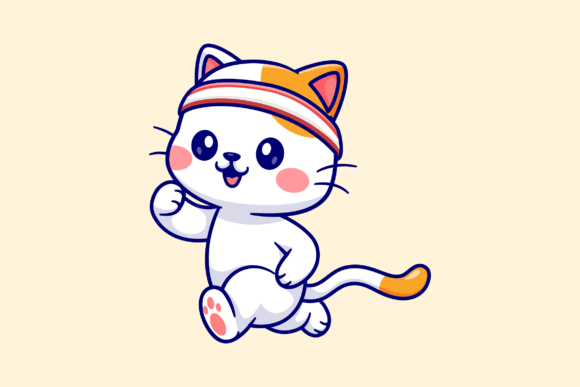
Cute Cat Running with Headband Cartoon
First Impression: Playful Energy, Clean Lines, Instant Charm
When I opened Cute Cat Running with Headband Cartoon, my first thought wasn’t “cute”—it was “ready to move.” The flat cartoon style gives it strong silhouette definition, and the headband adds just enough personality without clutter. It’s not overly detailed—no tiny whiskers or layered fur—but that’s a strength here. As an embroidery designer who’s stitched hundreds of animal icons, I immediately saw how this would translate: bold outlines, open negative space, and a compact shape that avoids awkward stretching across seams or curves. It feels like a design made *for* stitching—not just drawn for screen display.
A Real Project Test: Embroidering a Small-Batch Tote for a Local Pet Rescue
Last week, I used Cute Cat Running with Headband Cartoon on a set of organic cotton tote bags for a neighborhood cat rescue’s fundraiser. We chose 8-inch hoops and medium-weight tear-away stabilizer. The result? Crisp, confident stitching—even at 3.8 inches wide. The headband’s clean curve held up beautifully in satin stitch, and the cat’s legs stayed distinct without thread pooling or distortion. Customers loved the energy: one told me her daughter pointed and said, “That cat’s *trying*!” That kind of instant connection matters—it turns a simple embroidered patch into a conversation starter and a memory anchor.
Where This Design Shines (and Where It Needs Thought)
Cute Cat Running with Headband Cartoon works exceptionally well for:
- Custom apparel: Sweatshirts, crewnecks, and relaxed-fit tees—especially when placed left-chest or centered on the back. Its horizontal orientation and balanced weight keep it legible even on slightly textured fleece.
- Embroidered patches: Perfect for iron-on or sew-on appliqué designs. The isolated vector format means clean cut lines and minimal fraying risk.
- Baby embroidery: On onesies, bibs, or burp cloths—its friendly scale and lack of fine detail reduce snagging and make it safe for delicate skin.
- Holiday embroidery: Think “cat Olympics” stockings or New Year’s Eve sweatshirts—the sporty theme reads instantly, even in seasonal palettes.
- Tote bag design and apron fronts: The illustration’s width-to-height ratio fills space without crowding, and its cheerful vibe aligns with handmade product charm.
But be thoughtful with placement and context:
- Small hoop sizes (<5 inches): Scale down carefully—the headband’s thickness and leg separation need breathing room. Below 2.5 inches, some softness in definition is inevitable.
- Stretchy fabric like knits or jersey: Use cut-away stabilizer underneath *and* topping for best results. The design’s motion lines can blur if tension isn’t locked in.
- Dark fabric: Test thread colors early. Light pastels pop, but avoid pale yellow on navy unless you’re using high-contrast thread—some vector previews don’t reflect real-world thread opacity.
- Curved surfaces like caps: The illustration’s flat cartoon style handles gentle curvature well, but avoid placing it too close to the bill seam where distortion increases.
- Frequent-wash items like tea towels or baby blankets: Confirm your stitch density isn’t overly aggressive—tight fill stitches can stiffen fabric over time. A light running stitch outline + moderate fill keeps it soft and durable.
What It Adds to Your Handmade Product—and What It Doesn’t Promise
Cute Cat Running with Headband Cartoon elevates visual appeal without demanding perfection from the stitcher. It doesn’t rely on photorealism or micro-detail, so minor variations in thread tension or fabric feed won’t undermine its impact. That builds customer trust—especially for Etsy sellers and craft fair vendors who need consistent, charming results batch after batch.
It supports brand consistency for small shops leaning into lighthearted, approachable aesthetics—think boutique pet goods, yoga studios with feline themes, or kids’ activity centers. And yes, it boosts giftability: people buy embroidered items because they want meaning *and* delight. This design delivers both—without needing explanation.
That said, it won’t carry complex storytelling or niche symbolism. It’s not a logo replacement or a typographic companion. It’s a joyful, focused illustration—a single note played clearly. Use it as a hero element, not background filler.
Practical Embroidery Designer Notes Before You Stitch
Before committing to your first finished product, do these five things:
- Test on scrap fabric matching your final garment’s weight and stretch—don’t skip this step, even for digital embroidery files you’ve used before.
- Check thread color contrast in natural light, not just on screen. A bright pink headband may look vivid in mockups but fade against heather grey fabric.
- Review stitch density in your embroidery software—if it’s dense, consider simplifying fill areas or switching to a lighter fill stitch for softer drape.
- Confirm hoop size compatibility with your machine and intended placement. Some vector illustrations scale beautifully; others lose clarity fast.
- Inspect small details like the gap between the cat’s front and back legs—will that translate cleanly in satin stitch? If unsure, run a black-and-white test stitch to assess edge definition.
Also: compare how Cute Cat Running with Headband Cartoon looks against both light and dark backgrounds in your printable mockups. And always verify licensing—since it’s listed as a Graphics asset under Illustrations, confirm whether commercial use (e.g., selling embroidered totes on Etsy) is permitted before launching your craft business listing.
Final Thought: A Reliable Spark, Not a Magic Fix
This isn’t a “set it and forget it” embroidery file—but it’s reliably adaptable. It respects the craftsperson’s time and the customer’s eye. Whether you’re stitching a personalized gift for a new cat parent or building a cohesive line of sporty-kid apparel, Cute Cat Running with Headband Cartoon brings warmth, movement, and quiet professionalism. It doesn’t shout. It winks—and invites you to stitch something true.