Cowboy Cat Silhouette Black
First Impressions: A Wink, a Stetson, and Zero Clutter
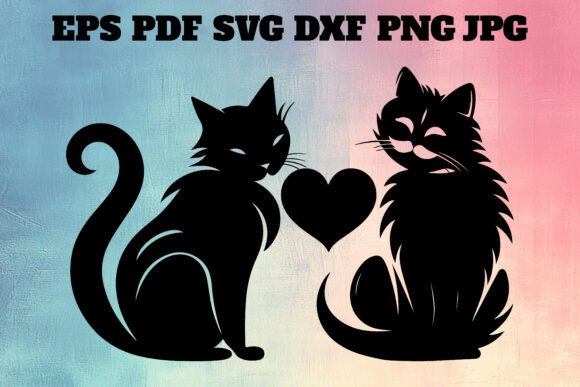
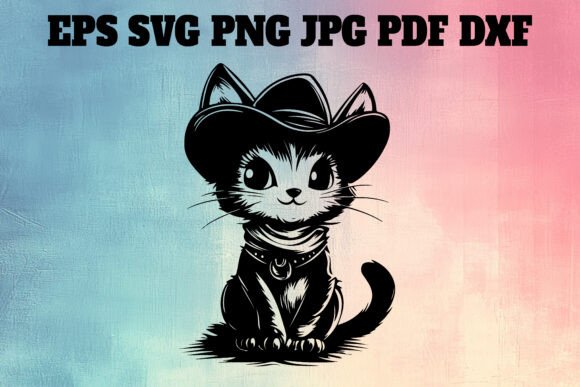
Unzipping the Cowboy Cat Silhouette Black file feels like opening a well-organized sketchbook—not a stock library dump. What hits you first is its confident simplicity: a clean, bold profile of a cat wearing a wide-brimmed cowboy hat, all in one uninterrupted black shape. No gradients, no drop shadows, no extra flourishes. It’s not “cute” in a saccharine way—it’s wry, dry, and instantly recognizable. That matters when you’re stitching on a canvas tote for a local boutique or embroidering a baby onesie for a Texan grandparent. The silhouette carries attitude without shouting, and that translates directly into visual confidence on fabric.
Where It Lives Best: Real Projects, Not Just Pixels
I tested Cowboy Cat Silhouette Black across three real-world builds: a medium-weight cotton twill apron for a coffee roaster’s staff gift, a 100% cotton crewneck sweatshirt for a small-town pet rescue fundraiser, and a set of linen tea towels for an Etsy shop focused on rustic-kitchen charm. In every case, it held up—not just technically, but emotionally. On the apron, it read clearly at 3.5 inches wide, with crisp edges even after industrial laundering. On the sweatshirt, the solid black shape popped against heather grey without bleeding or filling in. And on the tea towel? It gave handmade warmth without looking amateurish—exactly what customers pay a premium for.
This isn’t a design that begs for embellishment. It works as a standalone machine embroidery design, not an applique design needing layers or raw edges. That makes it ideal for fast-turnaround projects: embroidered patches for scout troops, cap fronts for craft fairs, pillow covers for nursery decor, or even holiday embroidery on denim stockings. Its strength lies in restraint—so it never competes with fabric texture or garment structure.
Where to Pause—and Why
That same boldness becomes a consideration on certain substrates. On thin, lightweight fabrics (think baby swaddles or rayon-blend scarves), I recommend adding a light tear-away stabilizer *under* the fabric—not just behind it—to prevent shadowing or puckering around the outer curve of the hat brim. On highly textured fabrics like bouclé or thick terry cloth, test stitch first: the silhouette’s smooth perimeter can blur if stitch density isn’t balanced for loft. And on stretchy knits? Hoop with care—use a cutaway stabilizer and avoid hooping too tightly, or the cat’s ear tip may distort.
Also worth noting: because Cowboy Cat Silhouette Black is delivered as an EPS 10 file (ideal for vector scaling in Illustrator or similar), it’s not a ready-to-stitch embroidery file. You’ll need to digitize it—or hire someone who does—before running it on your machine. That means reviewing stitch density, satin stitch width on the hat band, fill stitch angle for even coverage, and whether tiny details (like the subtle curve of the cat’s jawline) translate cleanly at sub-2-inch sizes. Don’t assume it’s optimized out of the box.
Design Assets That Earn Their Place in Your Workflow
As an Illustrations asset, Cowboy Cat Silhouette Black stands out because it’s built for translation—not just display. Its vector foundation means it scales cleanly from a 1-inch patch to a 6-inch tote bag front without pixelation or jagged edges. That flexibility pays off when you’re building printable mockups for Etsy listings or designing cohesive branding across embroidered products and digital assets. Customers notice when a design looks intentional—not “plastered on.” This one does.
It also supports brand consistency effortlessly. Whether you’re selling handmade product bundles or launching a line of western-themed nursery decor, Cowboy Cat Silhouette Black reads as part of a thoughtful collection—not a clipart afterthought. That perception boosts perceived value, customer trust, and repeat engagement. A buyer choosing this for a personalized gift isn’t just buying a cat—they’re buying wit, regional charm, and quiet craftsmanship.
Practical Notes Every Embroidery Designer Should Run Through
- Test first: Stitch on scrap fabric matching your final project’s weight, weave, and stretch—even if it’s just a corner swatch.
- Check thread color contrast: This is a black silhouette, but thread sheen and fabric tone change everything. Try matte black on dark denim vs. glossy black on oatmeal linen.
- Confirm hoop size early: Its clean lines work best at 2.5–4.5 inches wide. Below 2 inches, minor detail loss is likely; above 5 inches, consider reinforcing stitch density to avoid thinning.
- Inspect corners and curves: Digitize with attention to the hat’s brim edge and cat’s ear tip—those points must anchor cleanly or they’ll fray visually.
- Mock it in black and white: If your final product uses light/dark fabric variants, preview how the silhouette reads without color crutches.
- Stabilizer isn’t optional: Use cutaway for knits, tear-away for stable wovens, and fusible + tear-away for lightweight linens.
- Licensing check: Since this is sold as a Graphics file—not a pre-digitized embroidery file—the commercial use terms apply to your finished product, not the vector itself. Verify permissions before selling stitched items or bundling the EPS in digital product kits.
Final Thought: It’s Not Just a Cat. It’s a Conversation Starter.
What makes Cowboy Cat Silhouette Black more than decoration is how it lands with people. At a craft fair last month, I watched a customer pause mid-aisle, point to a sweatshirt with this design, and laugh aloud—then buy two. That kind of reaction doesn’t come from complexity. It comes from clarity, personality, and smart execution. For Etsy sellers building a memorable shop identity, for apparel decorators tired of overworked trends, and for makers who believe handmade product should feel both intentional and joyful—this is the kind of design asset that earns shelf space, not just screen time.
Use it where simplicity speaks louder than detail. Respect its constraints. And always—always—stitch a test first.